Team · What defines us
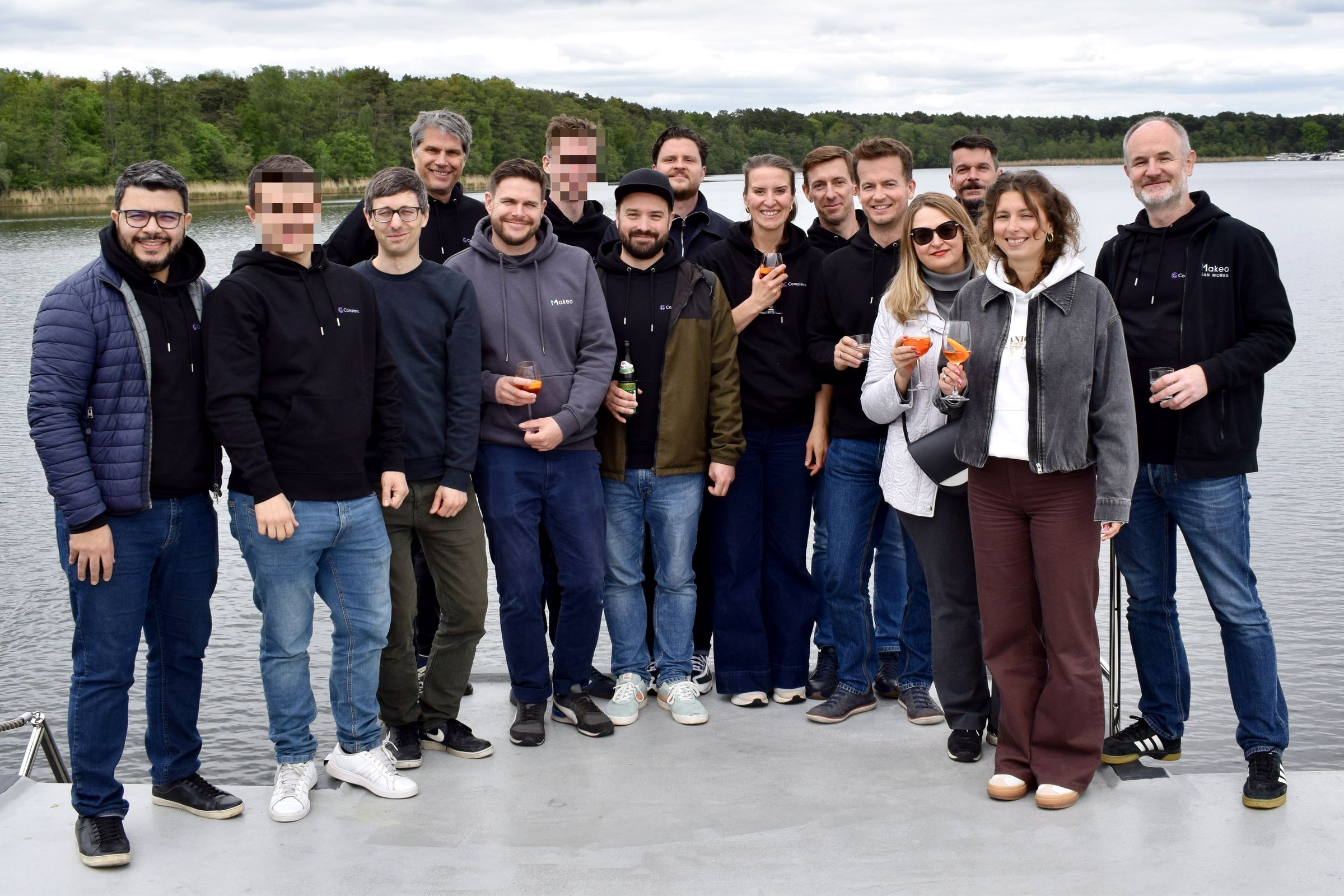
This is us.
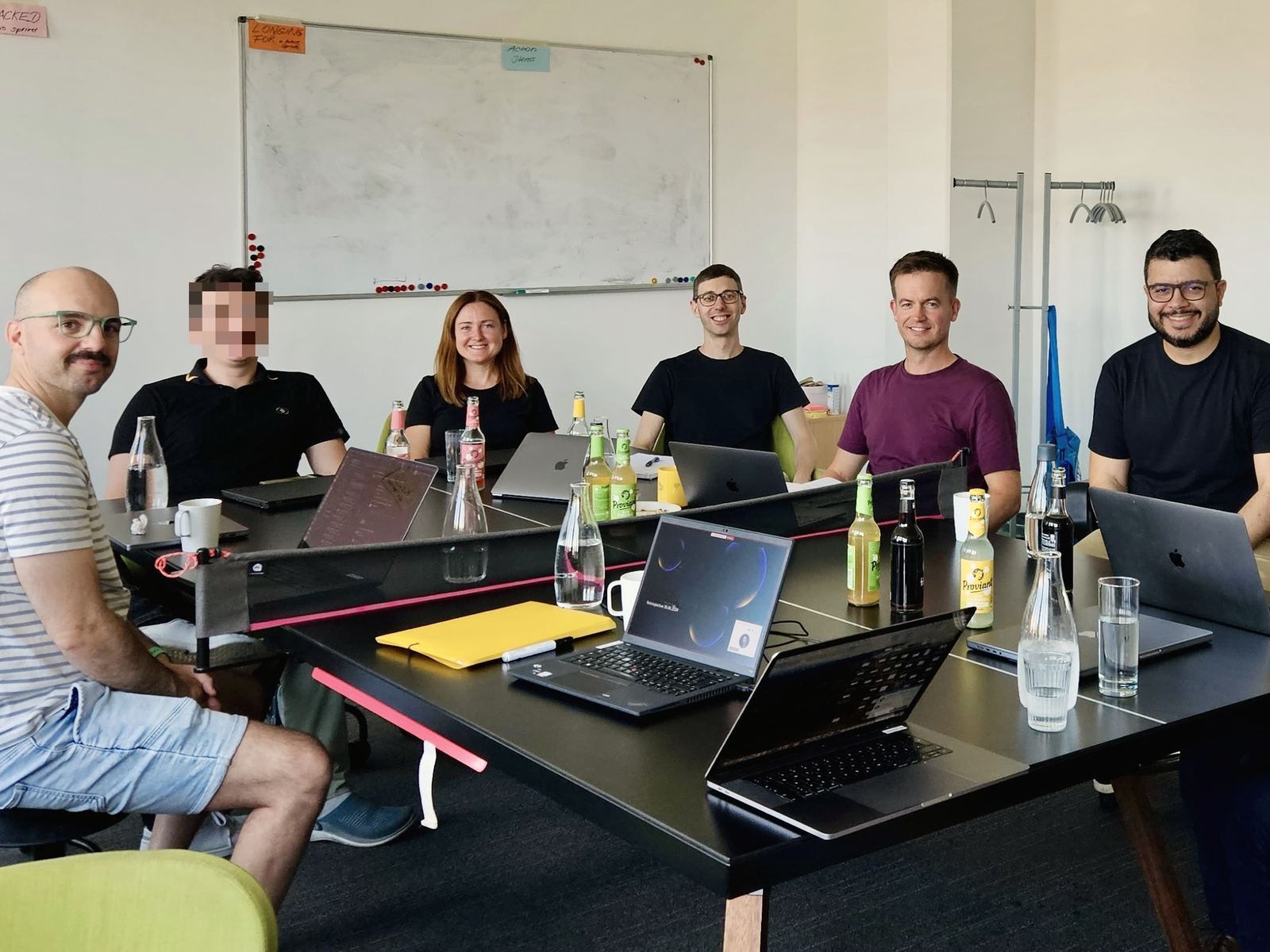
We are 25 people in Berlin who chose this company — and have been shaping it ever since. Everyone here can talk to everyone, and our energy goes into our work — not into positions and politics.
Those are two of our greatest strengths.
The team in numbers
We stay for the long run.
We like looking at these numbers, because they say more about a company than any mission statement — we are proud of them and grateful for them.
Each segment is one person. Six colleagues celebrate ten years with us in 2027.
Calculated for the Complevo team excluding the managing directors, as of 30 October 2026: 16 people, median 8.5 years. The team of our subsidiary Makeo is not included here.
As equals
One team, two managing directors, one focus: the work.
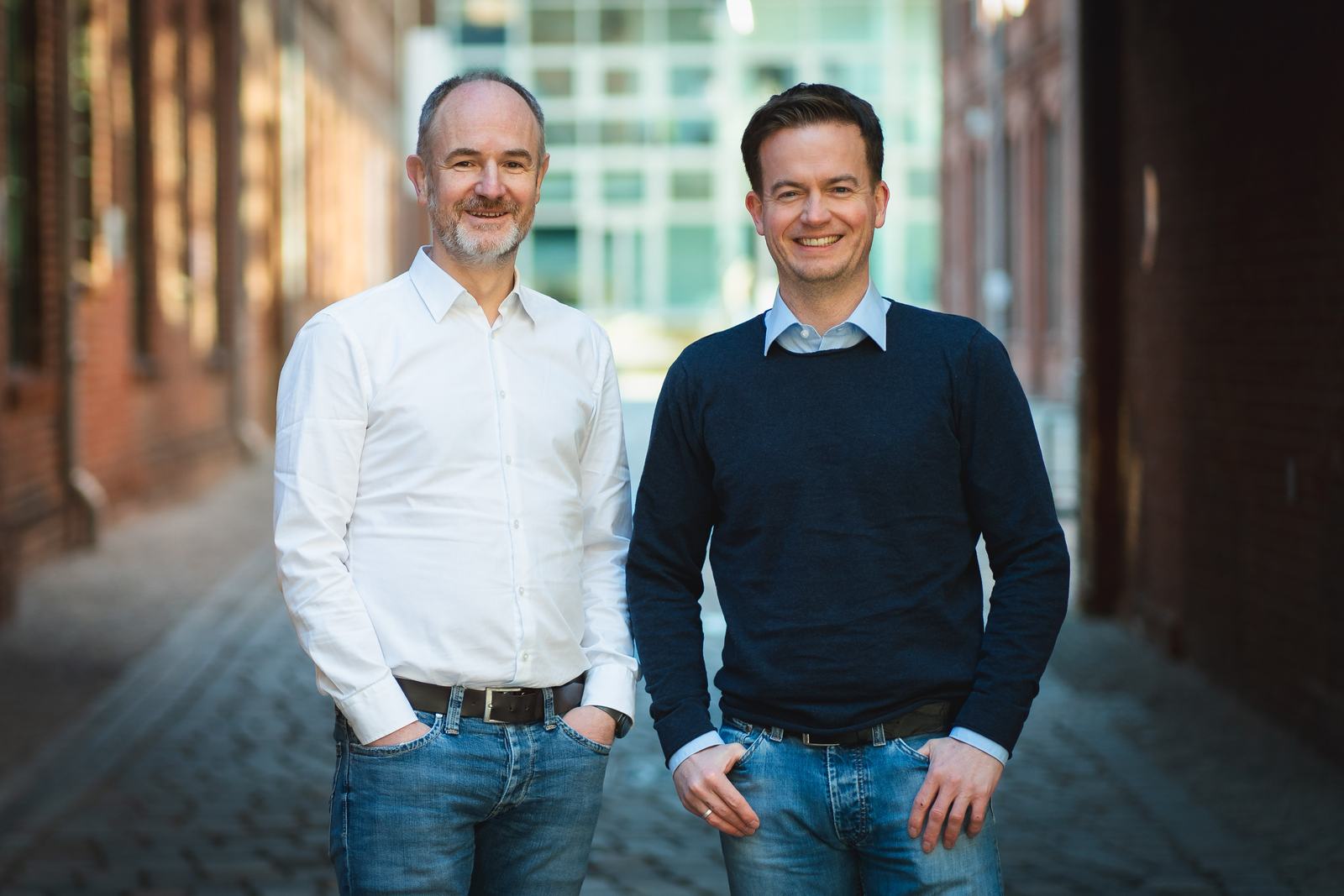
Karsten and Stefan have been running Complevo together since 2011. Both are directly approachable and always open to working out a solution together.
- Disagreement is welcome, not merely tolerated. Anyone who overturns an assumption in good time has done us a favour. That applies towards clients just as much as among ourselves.
- You know where you stand. Once a year, 360-degree feedback in every direction. In between, we talk to each other anyway.
- A problem may be called a problem. We make it visible while there is still time to act — internally just as much as with clients.
- Mistakes are part of it. A failed feasibility sprint counts as a result here. The same goes for people.
Trust and decency shape the way we work together. More on that here:

4.6
kununu score · 11 reviewsWhat comes with it
Good work needs good conditions.
These are ours.
Once a week we all meet at the office, and at lunchtime the company treats everyone — at a restaurant around the corner or ordered in. The one day you meet the people you otherwise only see on a call.
Home office or office, whatever suits you.
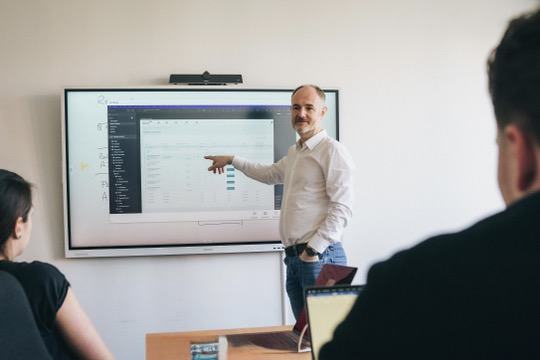
A fixed slot in the calendar with the whole team, to move our work forward with AI, gather experience together and inspire one another. AI does not run on the side here — it has priority and a time of its own.
Further training is possible and encouraged — tell us what you need. Anyone who wants to go deeper into a technology or a subject area gets the time and the budget for it.
Mac or Windows, mouse and keyboard to your taste. You work with it every day — so you decide.
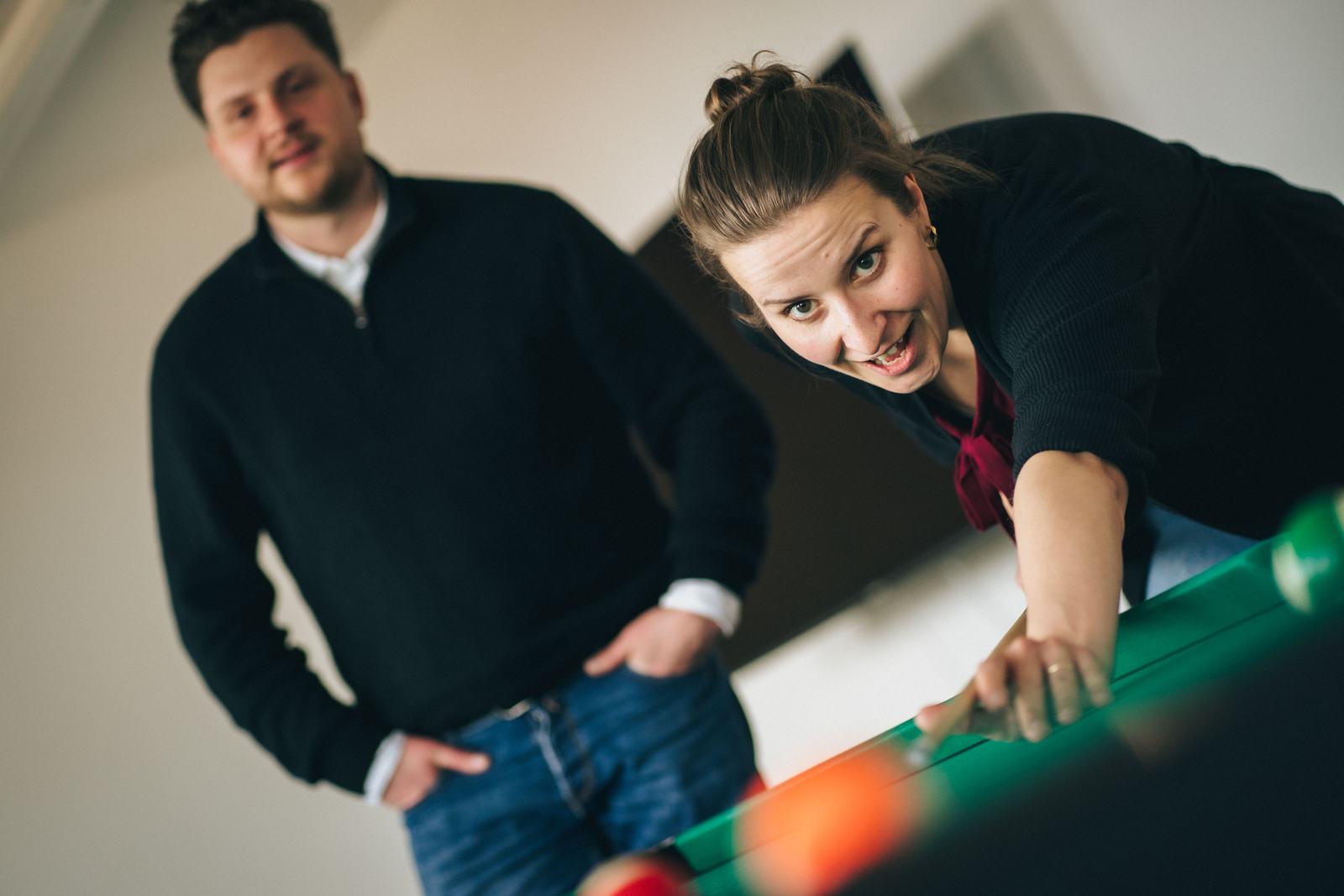
For our 15th anniversary we rented a raft — with music and a drum workshop. The next Christmas party will be a shared VR session followed by dinner.
A monthly allowance, freely usable with many partners — including Urban Sports.
With tenures like ours, it genuinely pays off.
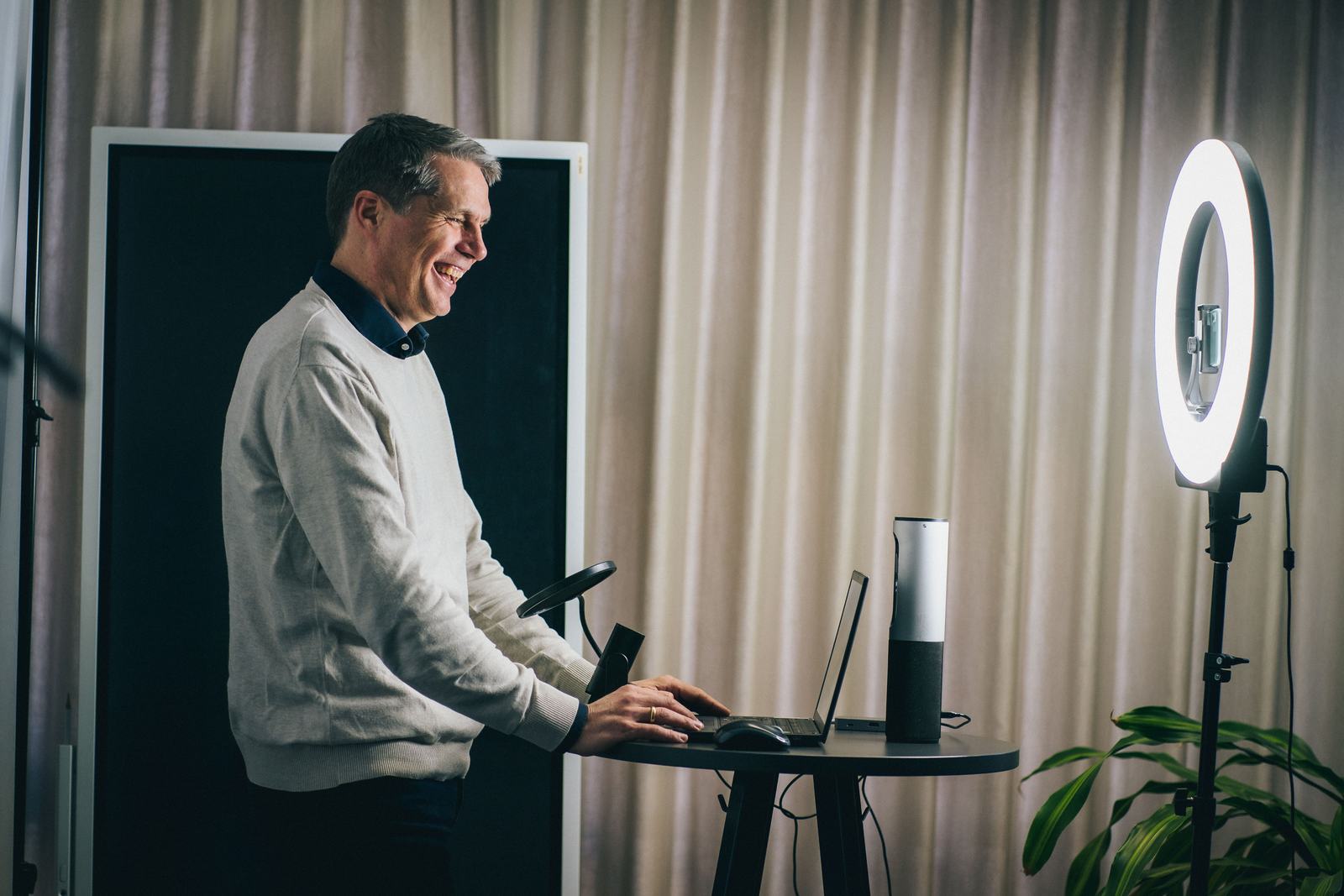




“If you think a decision is wrong, say so. We would rather listen early than correct late.”
Karsten Friedrich & Stefan Pillasch, ManagementHow we work
Four phases, four decisions.
Our approach is the structure people actually work in. Each phase creates the basis for the next decision.
Understand
Which process is worth turning into software at all?
- CEOs
- PM
EnsuresThat only the processes genuinely worth it end up in software.
Prove
Does it really work — with real data, at real volumes?
- Developer
- PM
EnsuresThat budget is only committed once the assumption is proven.
Deliver
How does the solution reach production reliably?
- Developer
- PM
- CEOs
EnsuresThat the real status is visible at all times — to everyone involved.
Operate
How does the system stay stable and economical?
- Developer
- IT Admin & IS
EnsuresThat the knowledge stays in-house and the costs stay predictable.
Across all four phases: Office Manager, IT Admin, Information Security Officer and People and Culture Manager. These four hold the place together — and appear in no process diagram.
What that means for you
We build as if we were going to run it ourselves.
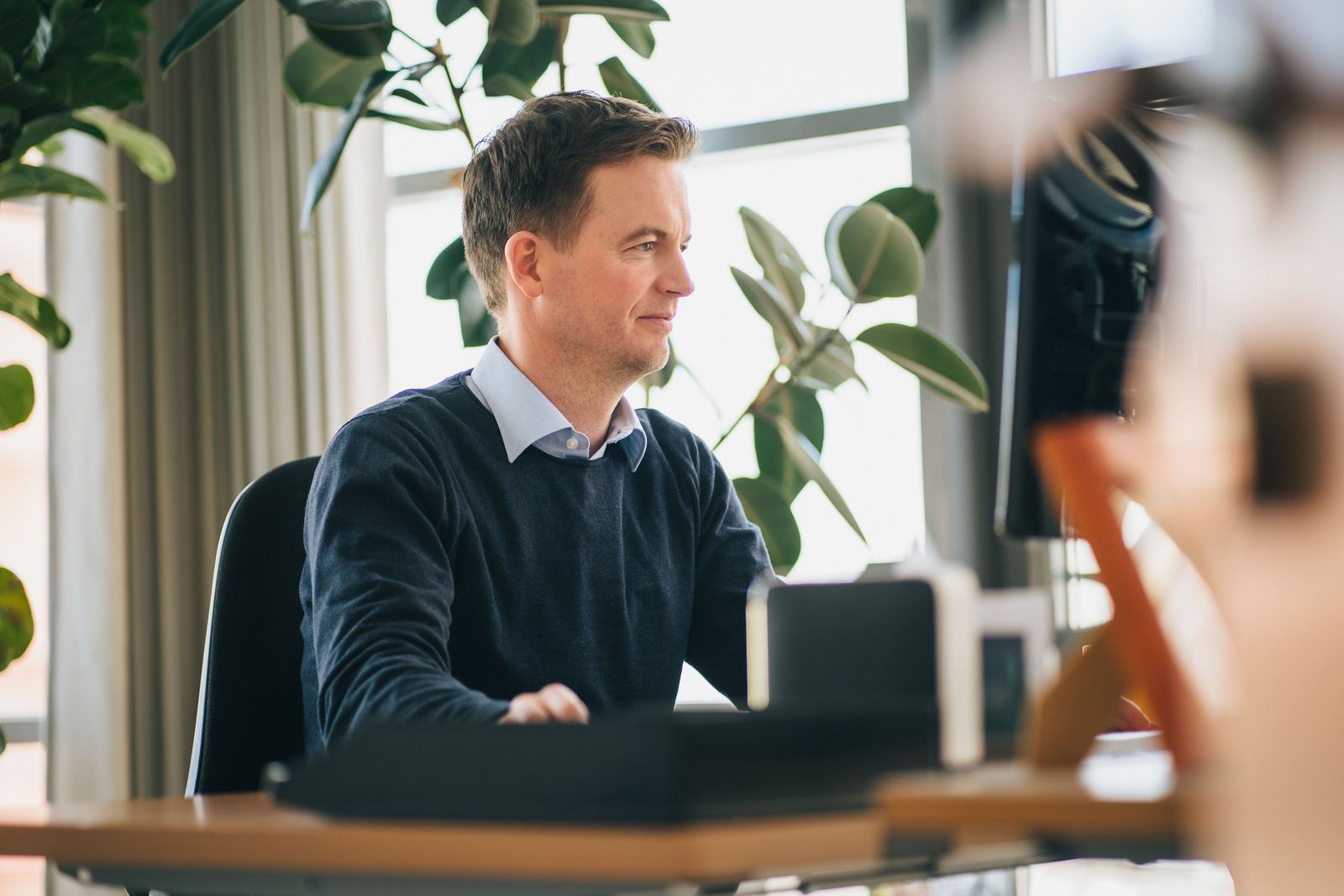
Whether we keep running a system after go-live is the client’s decision — for us it is an option. Either way, we always build as though it stayed with us.
That changes a surprising amount. Review takes priority over the next feature, and not because a guideline says so, but because the same people will be working with it tomorrow.
And when we do take over operations, you get something rare: you see over years what became of your decisions. Our flagship project has been running worldwide in the millisecond range for three years — looked after by the people who built it.
Who to talk to
Who you will meet.
Most of us appear here as a team rather than as individual profiles. These five you will meet in any case.
-
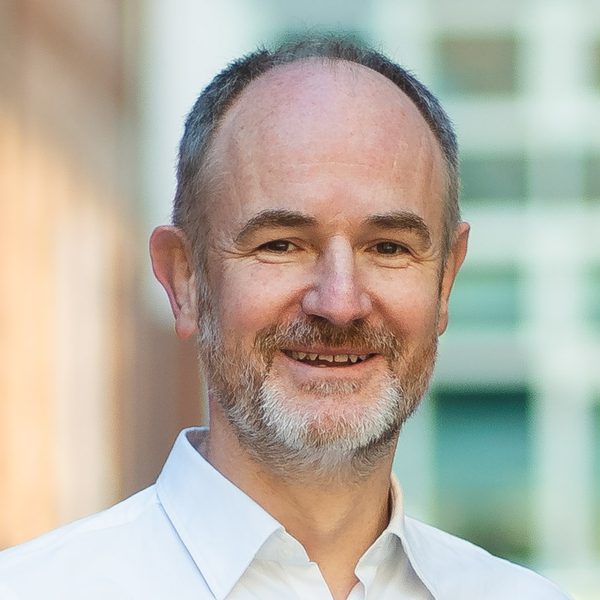 Karsten FriedrichManaging DirectorLinkedIn
With the company since it was founded in 2011.
-
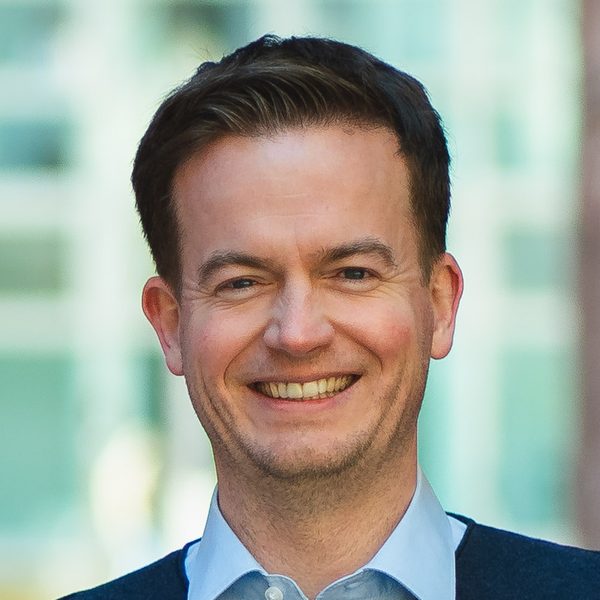 Stefan PillaschManaging DirectorLinkedIn
With the company since it was founded in 2011. First point of contact for client projects.
-
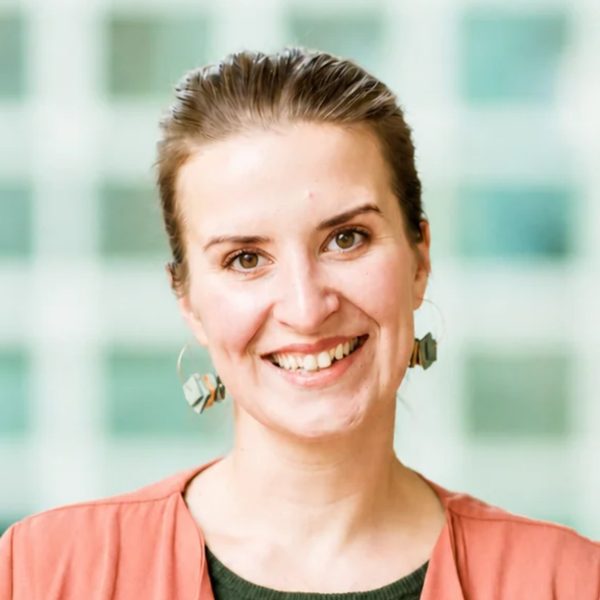 Ronja Tretter-KhokharPeople and Culture ManagerLinkedIn
Your first point of contact — she replies personally.
-
 Thomas KänelProject ManagerLinkedIn
-
 Kevin DeyProject ManagerLinkedIn
Frequently asked
Answered briefly.
What technologies do you work with?
At the core, .NET with C#: REST APIs, microservices, event-driven architecture and domain-driven design. On the front end, React and React Native with TypeScript. Alongside that PostgreSQL and SQL Server, messaging via RabbitMQ, Kafka or NATS, plus Docker and Kubernetes, delivered to the cloud through a CI/CD pipeline.
On top of that comes AI — as a tool in everyday work, not a slide topic: code assistance in the IDE, agents that run tests, explain legacy code that has grown over the years, search through data or handle routine tasks in operations. We try out new models and tools quickly, and drop them just as quickly when they add nothing to real work. Our hype cycle lasts about a week.
More important than the list is how we work with it: unit and integration tests belong to the feature, not to the end of the project; code goes through review; and architectural decisions are made by the team together. Planning happens in sprints or on a Kanban board — whichever suits the project.
Which parts of that you will meet depends on what you work on. With systems that run for years, there is rarely one stack, but several generations of one.
How big are the teams?
What does the application process look like?
Informally, by email to people@complevo.de — a CV is enough. You will get a personal reply within two working days. After that there are two appointments: an introductory conversation of about an hour by video, and a technical conversation at our office, where you meet the team and our management and we go into detail on a real task. The decision follows within five working days — with reasons, even if it is a no.
And if it is a yes, we start with a prepared onboarding. In your first week you get to know the team, gain step-by-step insight into our processes and tasks — and we look forward to your first team lunch with us. An onboarding buddy from the team will be at your side. Elena from office management, Robert from IT administration and Ronja from People and Culture are there in person for anything else.
Which industries do you specialise in?
Can I join from a different field?
Just say hello.
We are not advertising any positions at the moment. If what you have read here still interests you: an email is enough — ideally with a link to something you have built. You will get a personal reply.
How we handle your data is explained in our privacy policy (German).